Consumer demand is moving food colourants from synthetic chemistry toward plant-based alternatives. MarketsandMarkets reported that the global natural food colours market was valued at approximately USD 1.5 billion in 2024. Its forecast also indicates continued growth through 2029. Grand View Research similarly identifies clean-label products as a major market driver. These figures explain why manufacturers are studying how are natural food colorants extracted from plants.
The process usually begins with carefully selected materials. Beetroot may supply betalains, while turmeric provides curcumin. Purple cabbage and grape skins contain valuable anthocyanins. Technicians wash, dry, and mill these materials before extraction. Water, ethanol, oils, or other approved solvents may then draw out the target pigments. Temperature matters. Too much heat can fade delicate anthocyanins. Oxygen can also damage colour during mixing and storage.
Food scientist Dr. Kantha Shelke offers a useful caution: “Natural does not always mean healthier.” That sentence deserves attention. A plant source still requires testing for purity, stability, allergens, and contaminants. The final extract may need filtration, concentration, drying, or emulsification. Its performance can change with acidity, light, heat, and packaging. A bright sample in a laboratory may behave differently inside yoghurt or a baked product.
This guide examines seven practical extraction considerations. It connects plant structure, solvent choice, processing conditions, and commercial quality. Some methods sound simple. They are not always simple at scale. Industry reports provide market context, while laboratory evidence determines whether a colourant truly performs.
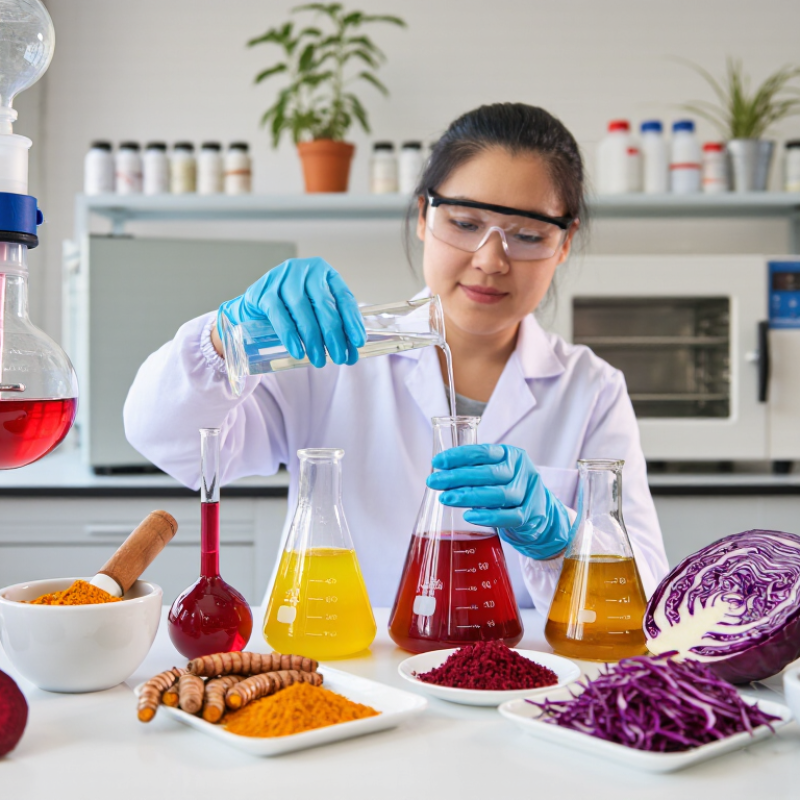
Natural food colors begin with the plant’s pigment profile. Red cabbage, purple sweet potato, and grape skins provide anthocyanins. These pigments respond strongly to acidity. Beetroot supplies betalains, while turmeric offers curcumin. Paprika and annatto contribute carotenoids with warm yellow and orange tones. Spinach contains chlorophylls, although these pigments can fade under heat and acidic conditions.
Extraction is rarely a perfect transfer.
Water can recover anthocyanins from chopped plant tissue, but oxygen and heat may reduce stability. Food-grade ethanol often improves recovery of less water-soluble compounds. Oil-based extraction suits carotenoids from paprika or annatto. Grinding, filtering, concentrating, and drying then shape the final powder or liquid color. Small details matter. A 2023 review in Foods reported that pH, temperature, light, and oxygen strongly influence anthocyanin stability. Practical trials should measure color strength, not only extraction yield. A darker extract may still perform poorly in a beverage.
Market demand also explains this technical focus.
MarketsandMarkets estimated the global natural food colors market at about USD 1.8 billion in 2023, with continued growth projected through 2028. However, market estimates differ by product scope and region. That uncertainty deserves attention. Reliable production requires identity testing, microbial control, solvent limits, and compliant labeling. Codex specifications and local food regulations should guide each ingredient’s use. Natural does not automatically mean stable, uniform, or suitable for every recipe.
Preparing Plant Materials for Efficient Color Extraction
Good color extraction begins with the plant, not the solvent. Select clean, correctly identified materials at suitable maturity. Young leaves may contain less pigment, while overripe fruit can oxidize quickly. Use petals, peels, roots, or leaves without mold, soil, or chemical residues. Food-grade handling matters.
Remove stems and damaged sections before washing the material with cool, clean water. Pat it dry gently. Excess water can dilute the extract and encourage spoilage. Cut roots and peels into small, even pieces. Thin slices expose more surface area. However, powder is not always better. Very fine particles can make filtration slow and cloudy.
Drying requires care. Low heat helps protect sensitive pigments, especially anthocyanins and some carotenoids. Direct sunlight may fade them. A well-ventilated, shaded area is safer for small batches. Record the plant variety, harvest date, drying temperature, and final weight. These notes improve repeatability.
Do not assume a bright raw plant will produce a stable color. Pigments can change with heat, oxygen, acidity, and storage time. A simple test with different pH levels can reveal useful behavior. I would also compare fresh and dried samples, because drying may improve concentration but reduce brightness. This preparation stage is easy to underestimate. Small handling errors can affect the final shade.
The chart shows representative maximum absorbance wavelengths used to monitor common plant pigments during extraction. Proper material preparation—sorting, washing, reducing particle size, protecting samples from excess heat and light, and selecting a suitable solvent—helps release pigments while limiting oxidation and degradation.
Values are typical reference wavelengths and may shift with solvent, pH, concentration, and plant variety.
Choose fresh, strongly colored material, such as beetroot, turmeric, spinach, or purple cabbage. Wash it carefully and remove damaged sections.
Use water extraction for anthocyanins and betalains. Chop the plant, add warm water, and keep the temperature moderate. Excessive heat can dull purple and red shades.
Try gentle simmering when pigments are trapped in firm tissues. Strain the liquid through fine cloth or food-safe paper.
Use oil for carotenoid-rich sources, including paprika, carrot, and marigold petals. Warm oil slowly, but never let it smoke.
Press or blend soft plant tissues before filtering. This method gives useful results with berries and leafy vegetables. My first batches were often cloudy. Better filtration helped.
Dry the plant material before grinding it into powder. Low-temperature drying protects color more effectively than strong heat.
Use a food-grade ethanol and water mixture only when suitable facilities, labeling, and local food rules permit it. Different pigments respond differently to pH, light, oxygen, and storage temperature. Purple cabbage may turn pink in acid conditions. Chlorophyll can fade quickly. I would measure pH, record extraction time, and compare samples under natural light. Small errors matter. Clean tools and verified food-contact containers also support safer, more repeatable results.
Plant color extraction begins with disciplined raw-material handling. Tip one: verify botanical identity and harvest maturity, because anthocyanin levels can change quickly. Tip two: wash, dry, and mill the material uniformly. Tip three: select water, food-grade ethanol, or both, according to pigment polarity. Cold extraction protects delicate compounds, but it can reduce yield. Small details matter. A 2024 MarketsandMarkets report estimated the natural food colors market at about USD 1.7 billion, reflecting stronger demand for reliable, scalable processing.
Filtering removes skins, fibers, and insoluble particles. Tip four: use staged filtration, beginning with coarse screening and ending with membrane filtration. Clear extracts improve texture and dosing accuracy. Tip five: concentrate under vacuum, preferably below harsh thermal conditions. Lower pressure helps limit color fading and unwanted cooked notes.
However, every plant behaves differently. Beetroot, turmeric, and purple corn cannot share one fixed temperature profile. Pilot trials remain essential.
Stabilization determines whether the color survives storage and processing. Tip six: control pH, oxygen, light, and metal exposure during filling. Tip seven: evaluate carriers, antioxidants, or microencapsulation when the pigment is unstable. According to the 2023 FAO report on food loss and waste, poor handling remains a major supply-chain challenge, making process efficiency important beyond appearance.
A bright extract is not automatically a useful ingredient. Real testing should include heat, light, shelf-life, and application trials. Some results will disappoint. That is useful data.
Plant colorants usually begin with cleaned petals, leaves, roots, fruits, or skins. Drying temperature matters because excessive heat can fade delicate pigments. The material is milled, then extracted with water, food-grade ethanol, or another permitted medium. The method depends on the pigment. Anthocyanins often prefer mildly acidic conditions, while carotenoids need controlled oil-based or solvent-assisted extraction. Filtration removes plant solids. Concentration creates a stronger color, but it can also increase bitterness or sediment.
Safety testing must follow the intended food application. Check microbial counts, heavy metals, pesticide residues, allergens, and residual solvents. Confirm that every processing aid is permitted for food use in the target market. A small laboratory sample is not enough. Test several batches, because harvest season and soil conditions can change the result.
I have found that “natural” does not automatically mean safe. That assumption needs testing.
Color quality should be measured under realistic conditions. Record shade, strength, pH response, light exposure, heat tolerance, and storage stability. A red extract may turn purple in one drink and brown in a baked filling. That surprise is common.
Trial batches should copy the real recipe, including sugar, salt, fat, oxygen, and packaging. Use the colorant in beverages, dairy-style foods, sauces, confectionery, or baked goods only after sensory checks. Taste, odor, texture, and consumer expectations matter. Some extracts look attractive but perform poorly during shelf life. More testing is wiser than a confident guess.
Fresh, strongly colored plants work best, including beetroot, turmeric, spinach, and purple cabbage. Remove damaged pieces before processing. Older material may produce weaker color.
Chop the plant and add warm water. Keep the temperature moderate, because excessive heat can dull red and purple shades. Gentle simmering helps when pigments are trapped in firm tissues.
Oil suits carotenoid-rich materials such as paprika, carrots, and marigold petals. Warm the oil slowly and never let it smoke. The result may still need careful filtering.
Yes. Press or blend soft tissues before filtering. Berries and leafy vegetables often release more color this way. My early batches were cloudy.
Begin with coarse screening to remove skins and fibers. Follow with fine cloth, food-safe paper, or membrane filtration. Clearer extracts support smoother texture and more accurate dosing.
Dry the material at low temperatures before grinding. Strong heat may weaken the color. The powder should be evenly dry, not warm and damp inside.
Control pH, oxygen, light, metal contact, and storage temperature. Purple cabbage may become pink in acidic conditions. Chlorophyll can fade quickly. Stability is not guaranteed.
Compare samples under natural light and record pH, extraction time, and temperature. Test heat exposure, light exposure, shelf life, and the intended food application. Some trials will disappoint. That is useful data.
This guide explains how are natural food colorants extracted from plants, beginning with suitable sources such as fruits, vegetables, flowers, leaves, roots, and seeds. It introduces key pigments, including anthocyanins, carotenoids, chlorophylls, and betalains, and describes how harvesting, cleaning, drying, cutting, or grinding plant materials can improve extraction efficiency. The article presents seven practical approaches, including water extraction, heat-assisted extraction, alcohol-based food-grade extraction, oil infusion, pressing, enzymatic treatment, and ultrasonic assistance.
It also covers the essential steps after extraction, such as filtering out solids, concentrating the color, and protecting pigments from light, oxygen, heat, and unsuitable pH conditions. Finally, the guide highlights how to assess safety, color strength, stability, flavor impact, and compatibility with different foods and beverages. These methods help produce consistent, plant-based colors while maintaining quality and supporting practical food applications.

Kawsana Health