In recent years, the demand for botanical extracts has surged, driven by their applications in dietary supplements, cosmetics, and pharmaceuticals. Ensuring the purity of these extracts is crucial for safety and efficacy. According to a report by the Botanical Safety Consortium, over 30% of botanical products contain contaminants or adulterants that compromise their integrity. To address this issue, understanding "how to test botanical extract purity" is essential for manufacturers and consumers alike.
Renowned expert Dr. Emma Green, a leading researcher at the Herbal Research Institute, emphasizes the importance of rigorous testing. She states, "Quality control is not just about compliance; it's about trust and safety." This statement underscores the necessity for robust methods that accurately assess the purity of botanical extracts.
Testing methods vary from chromatography techniques to DNA barcoding. Each method has its strengths and weaknesses. Some may only detect certain compounds, potentially missing contaminants. It's vital for industry stakeholders to stay informed about these testing techniques. They must adapt to ongoing advancements and challenges to ensure the highest quality and reliability in botanical products.
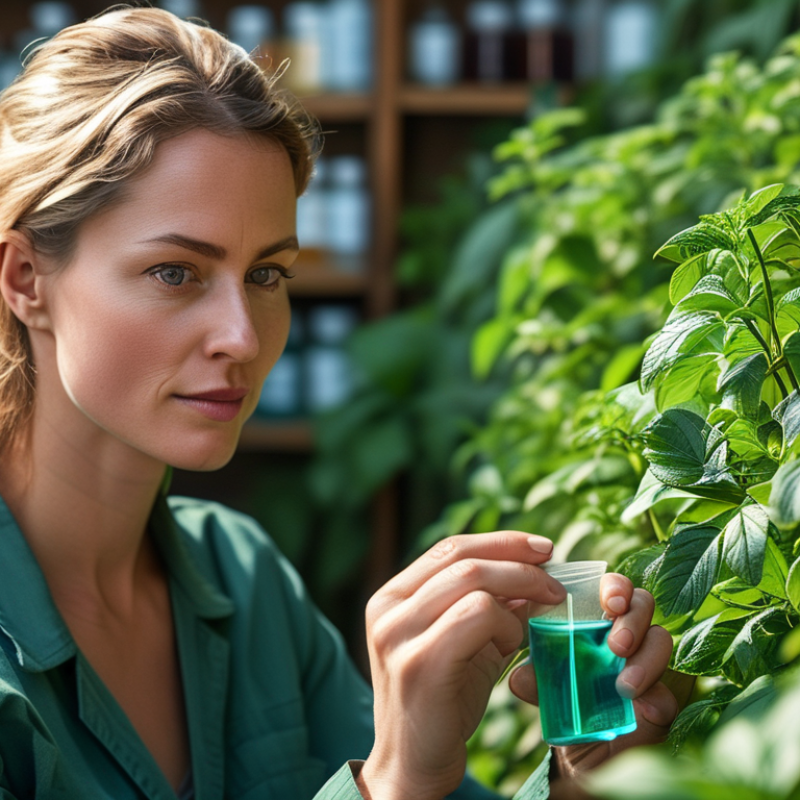
Analyzing the phytochemical composition of botanical extracts is crucial for ensuring their purity and efficacy. Various methods are employed to identify and quantify the active compounds within these extracts. Techniques such as high-performance liquid chromatography (HPLC) allow for detailed profiling of specific phytochemicals. It provides precise separation and quantification of compounds, which enhances reliability in research.
Another prominent method is mass spectrometry (MS), which works well alongside HPLC. This method helps in determining molecular weights and structures of compounds. Utilizing these two techniques in tandem can result in robust analytical data. However, these methods require intricate instrumentation and significant expertise, sometimes leading to data interpretations that may vary among experts.
Additionally, gas chromatography (GC) is widely used for volatile compounds. It provides clarity in the analysis of essential oils and terpenes. While this method is effective, it can miss non-volatile bioactive components. Each method has limitations, emphasizing the need for a comprehensive approach. It’s essential to compile diverse data sources and analytical techniques to achieve a holistic understanding of botanical extracts' quality.
High-Performance Liquid Chromatography (HPLC) plays a crucial role in assessing the purity of botanical extracts. This analytical technique separates compounds in a mixture, allowing for detailed analysis. By using HPLC, researchers can identify both active ingredients and any contaminants present. This precision is vital for ensuring that extracts meet safety and quality standards.
HPLC offers a reliable method for quantifying the concentration of each component. It works by passing a sample through a column filled with a stationary phase. Different components interact differently, leading to separation. Analyzing the output helps determine purity levels, though it requires skilled technicians. Mistakes in the process could lead to misleading results, emphasizing the importance of expertise in the field.
While HPLC is highly effective, its limitations warrant attention. Sample preparation can introduce errors, and not all compounds may be detectable. Additionally, the method requires expensive equipment and ongoing maintenance, which may not be feasible for all laboratories. Understanding these challenges is essential for researchers striving to achieve accurate results in botanical extract purity testing.
| Method | Description | Advantages | Limitations |
|---|---|---|---|
| HPLC | High-Performance Liquid Chromatography, used to separate, identify, and quantify components in extracts. | High sensitivity and accuracy, capable of analyzing complex mixtures. | Requires expensive equipment and skilled personnel. |
| GC | Gas Chromatography, useful for volatile compounds in extracts. | Quick analysis and high resolution for volatile components. | Not suitable for non-volatile or thermally unstable compounds. |
| UV-Vis Spectroscopy | Uses UV-Visible light absorption to analyze extract components. | Simple and cost-effective for compounds with UV activity. | Limited to specific compounds, cannot separate mixtures. |
| RFID | Radio Frequency Identification for tracking and inventory. | Efficient tracking and management of botanical materials. | Does not analyze purity but aids in tracking. |
| NMR | Nuclear Magnetic Resonance for detailed molecular analysis. | Provides structural information about compounds. | High cost and complex interpretation. |
| FTIR | Fourier Transform Infrared Spectroscopy for functional group identification. | Non-destructive and fast analysis of functional groups. | Less effective for complex mixtures without prior separation. |
| TLC | Thin Layer Chromatography for qualitative analysis of mixtures. | Simple and cost-effective for screening samples. | Limited resolution and quantification capability. |
| Microscopy | Optical and electron microscopy for examining plant structures. | Provides visual evidence of purity and adulteration. | Subjective interpretation and requires expertise. |
| Bioassays | Biological assays to test the activity of extracts. | Direct measure of biological effect, can indicate quality. | Time-consuming and may not provide information on all impurities. |
| Conductivity | Measures the conductivity of extracts to gauge purity. | Rapid and easy method for certain types of impurities. | Not specific, may not reflect overall extract quality. |
NMR spectroscopy has emerged as a powerful tool for verifying the authenticity of botanical sources. This technique analyzes the magnetic properties of atoms in a molecule. By examining these properties, researchers can identify unique chemical signatures found in specific plants. This method is non-destructive, preserving the integrity of samples while providing valuable data about their composition.
However, it's important to acknowledge that NMR spectroscopy has its challenges. The interpretation of spectra can be complex. Researchers must have a deep understanding of the chemical structures involved. Variations in sample preparation can also influence results. Despite these hurdles, NMR remains a reliable method for assessing botanical purity. It offers a level of precision that many other methods cannot match.
In practice, using NMR spectroscopy requires skilled technicians. They must carefully calibrate equipment to ensure accuracy. With advancements in technology, automation in sample analysis is becoming more common. Yet, human expertise remains crucial for contextualizing the data. Overall, while NMR spectroscopy is not without limitations, its role in verifying botanical authenticity is invaluable for the industry.
Mass spectrometry plays a crucial role in determining the purity of botanical extracts. This technique provides precise quantification of various compounds present in the extracts. By measuring the mass-to-charge ratio of ions, it enables scientists to identify and quantify the active ingredients effectively. Understanding these concentrations is essential, especially for pharmaceutical applications.
When using mass spectrometry to test purity, consider the sample preparation process. Properly prepare your botanical extracts to avoid contamination. The quality of the results can significantly depend on how cleanly samples are processed. Removing impurities ahead of time will yield more reliable data.
Remember that while mass spectrometry is powerful, it has limitations. The technique may not provide complete information about all components of a complex extract. Some compounds might remain undetected due to their low ionization efficiency. Ongoing calibration and validation of methods are necessary for accurate assessments. Paying close attention to these details will enhance the overall reliability of the results.
Thin Layer Chromatography (TLC) is an effective method for assessing the purity of botanical extracts. This technique separates components within a mixture, allowing for a clear visual representation of its composition. By using TLC, herbal product manufacturers can quickly identify contaminants or adulterants. The simplicity of the process makes it accessible for laboratories of all sizes.
When implementing TLC, it’s essential to choose the appropriate solvent system. A well-chosen solvent can enhance the separation of compounds, leading to more accurate results. Keeping your workspace clean is vital too. Even minute cross-contamination can skew results, requiring a repeat of the testing process. Adjusting your method may take time, but it is crucial for achieving dependable outcomes.
Tip: Regularly calibrate your TLC equipment to maintain precision. Another vital suggestion is to maintain detailed records of your experiments. This information can provide insights for future testing and method adjustments. Beware of overconfidence; even the best methods can yield unexpected results. Embrace challenges as opportunities to refine your approach. Stay curious and adapt; the world of botanical extracts is constantly evolving.
: HPLC assesses the purity of botanical extracts. It separates compounds for detailed analysis.
HPLC passes a sample through a column. Different components interact, allowing separation and analysis.
Sample preparation can introduce errors. Not all compounds may be detectable, and equipment is costly.
TLC is simpler and visually represents a mixture's composition. It is quicker for assessing purity.
The choice of solvent system affects compound separation. Clean workspaces are essential to avoid contamination.
Calibration maintains precision in results. It prevents errors that can arise from equipment drift over time.
Reflect on the method and conditions used. Adjustments may be necessary to achieve reliable outcomes.
Detailed records can track experiments and inform future adjustments. This improves overall testing accuracy.
Stay curious and adaptable. Challenges can enhance techniques and lead to better practices in purification processes.
Overconfidence can lead to overlooking potential issues. Always approach testing with careful consideration and readiness to revise.
In the quest to determine *how to test botanical extract purity*, several analytical methods stand out for their effectiveness in assessing the phytochemical composition of these extracts. High-Performance Liquid Chromatography (HPLC) plays a critical role in quantifying purity levels by separating and identifying different compounds within a sample. Similarly, Nuclear Magnetic Resonance (NMR) Spectroscopy serves as a powerful tool for verifying the authenticity of botanical sources, ensuring that the extracts meet quality standards.
Mass Spectrometry enhances this analytical process by accurately quantifying the concentration of specific compounds, providing further insight into the extract's composition. Additionally, Thin Layer Chromatography (TLC) offers a rapid and efficient method for assessing the purity of herbal products. Together, these techniques constitute a comprehensive approach to ensuring the integrity and safety of botanical extracts, which is crucial for consumers and manufacturers alike.

Kawsana Health